
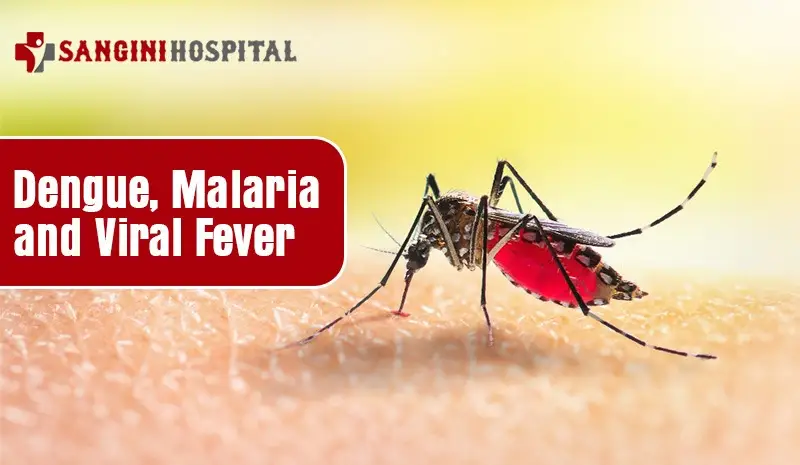
Monsoon brings more than rain. It brings a wave of infections—dengue, malaria, viral fever, and typhoid—many of which look almost identical in the first day or two. Not every fever with chills is dengue. Getting the diagnosis right matters because each condition needs a different treatment approach.
Dengue, Malaria, and Viral Fever: Key Differences
Fever With Chills: Is It Always Dengue?
No. Chills show up across many infections. Malaria tends to cause prominent chills and rigors specifically. Dengue usually hits with high fever, severe body ache, and that distinctive headache behind the eyes.
Fever and chills together—that combination alone doesn’t confirm anything.
Dengue—Common Symptoms
These are the common symptoms of dengue:
-
High-grade fever
-
Severe body and muscle ache
-
Headache or pain behind the eyes
-
Nausea or vomiting
-
Skin rash
-
Weakness
-
Falling platelet count in some patients
Worth knowing: A normal platelet count early in the illness does not rule out dengue. Counts shift as things progress—one reading doesn’t tell the full story.
Malaria—Don’t Miss It
During monsoon, malaria is just as common a culprit as dengue. Symptoms to look for:
-
Fever with chills and rigors
-
Sweating once the fever breaks
-
Headache and body ache
-
Weakness
-
A cyclical, recurring fever pattern
Prominent chills in a fever patient? Malaria needs to be in the differential, not assumed away.
Viral Fever
Viral infections typically bring:
-
Fever and chills
-
Body ache
-
Headache
-
Sore throat
-
Cough or cold
-
Fatigue
Most straightforward viral fevers settle with supportive care. A fever that drags on or keeps getting worse needs a proper medical look.
Dengue vs Malaria vs Viral Fever
| Feature | Dengue | Malaria | Viral Fever |
| High fever | Common | Common | Common |
| Chills/Rigors | May occur | Very common | May occur |
| Body ache | Common | Common | Common |
| Rash | May occur | Usually absent | Sometimes |
| Low platelets | Can occur | Can occur | Less typical |
Symptoms overlap more than most people expect. Lab testing often becomes necessary to actually pin down what’s going on.
When Should You See an MD Physician?
Don’t wait if any of these apply:
-
Fever lasting beyond 2–3 days
-
Very high fever or fever that keeps returning
-
Severe chills or rigors
-
Persistent vomiting or bad abdominal pain
-
Bleeding from nose or gums
-
Breathing difficulty
-
Reduced urine output
-
Extreme weakness, drowsiness, or confusion
Elderly patients, children, and anyone with existing chronic conditions—earlier assessment, not later.
What Tests May Be Required?
Your doctor will decide based on the day of illness and how things look clinically:
-
CBC and platelet count
-
Dengue NS1 antigen or antibody testing
-
Malaria antigen test and/or peripheral smear
-
Liver and kidney function tests
-
Urine examination
-
Other investigations as symptoms indicate
Running every test on every patient isn’t the right approach—clinical context guides what’s actually needed.
Don’t Assume Every Fever Is Dengue
Fever + chills ≠ automatically dengue.
Low platelets don’t prove dengue either—thrombocytopenia shows up in malaria and other infections too. The right approach is always clinical examination + appropriate investigations + monitoring. Not an assumption.
Frequently Asked Questions
1. Is every fever with chills dengue?
Not at all. Malaria, viral infections, and bacterial infections—chills show up across all of them. You really can’t tell just from that symptom alone. A proper evaluation is what actually tells you what’s going on.
2. Is fever with chills more suggestive of malaria?
Often, yes. Strong chills and rigors point more toward malaria than dengue in most cases—though other infections can produce them too, so it’s not absolute.
3. What are the common symptoms of dengue fever?
High fever that hits suddenly, severe body and muscle ache, headache, pain specifically behind the eyes, nausea, vomiting, and weakness. Sometimes a rash appears; sometimes it doesn’t.
4. Can dengue occur with a normal platelet count?
Absolutely. Early dengue frequently shows normal platelets. One reading in the first day or two doesn’t clear dengue from suspicion.
5. When should dengue testing be done?
Timing matters a lot here. The right test depends on which day of illness you’re on—NS1 antigen works differently from antibody tests at different points. Your physician picks the appropriate one based on that.
6. What is the difference between dengue and viral fever?
Dengue is a specific infection from a mosquito-borne virus. Viral fever is just a general umbrella term—it covers fevers from many different viruses, not one specific cause.
7. What are the symptoms of viral fever?
Fever, chills, body ache, headache, tiredness, sore throat, cough, runny nose—pretty much what most people call “feeling flu-ish.” Occasionally a rash appears too.
8. What are the symptoms of malaria?
Fever with chills or rigors, sweating when the fever breaks, headache, body ache, and weakness. Some patients notice the fever coming and going in a pattern—that cyclical quality is fairly characteristic of malaria.
9. Can malaria cause low platelets?
Yes, it can. People sometimes assume low platelets automatically mean dengue—that’s not accurate. Malaria and several other conditions bring platelets down too.
10. How long does viral fever usually last?
Most straightforward viral infections settle within a few days. If the fever is dragging on or getting worse rather than better, that’s the point to get it checked—don’t just keep waiting.
11. When should I see an MD physician for a fever?
Fever that won’t go away after 2–3 days, very high temperature, fever that keeps coming back, severe chills, repeated vomiting, bad abdominal pain, any bleeding, trouble breathing, or feeling extremely weak or confused—any of those, see a doctor promptly.
12. Is CBC required for every fever?
Not automatically. Whether you need a CBC depends on how long the fever has been going, what the symptoms are, and what clinical examination shows. It’s not a routine box to tick for every fever.
13. Can dengue be diagnosed only by platelet count?
No—and this is a common misconception. Platelet count helps track how someone is doing over time, but it doesn’t diagnose dengue. You need the right tests for that.
14. Can dengue and malaria occur together?
They can, yes. It’s not common, but co-infection does happen, especially during monsoon when both are circulating. A doctor will consider testing for both if the clinical picture suggests it.
15. Should antibiotics be taken for viral fever?
No. Antibiotics do nothing against viruses—taking them when they’re not needed creates more harm than good. They only come into the picture when there’s an actual bacterial infection involved.
16. What if the fever continues despite medicines?
Taking more of the same medicine isn’t the answer. Persistent fever needs a fresh look—repeat examination and likely further investigation to figure out what’s actually happening.
17. Is severe body pain a sign of dengue?
It’s one of dengue’s more recognizable features, yes—bad enough that dengue is sometimes called “breakbone fever.” But influenza and other viral infections also cause severe body pain, so it’s not dengue-specific.
18. When is dengue dangerous?
Pay close attention to these: persistent vomiting, bad abdominal pain, any bleeding from gums or nose, breathing difficulty, sudden drop in alertness, extreme weakness, or passing very little urine. These are warning signs that need urgent attention—the same day, not tomorrow.
19. Can dengue occur without a rash?
Yes, fairly often. Rash is one possible feature, not a required one. Plenty of dengue patients never develop it.
20. Can dengue occur without low platelets?
Yes, particularly in the first few days. Platelet drop tends to happen later in the illness. An early normal count doesn’t mean dengue is off the table.
21. What is the best treatment for dengue fever?
For uncomplicated dengue, treatment is supportive—the right fluids, managing the fever, careful monitoring, and watching closely for any warning signs. All of this should be under medical supervision, not managed at home alone.
22. What is the best treatment for viral fever?
Rest, enough fluids, and appropriate fever management cover most uncomplicated viral illnesses. The specific approach depends on which virus and how severe things are.
23. What is the best treatment for fever with chills?
There isn’t one standard treatment—it depends on the cause. Malaria gets treated differently from dengue, which gets treated differently from a bacterial infection. Diagnosis first, then treatment.
24. Which doctor should I consult for persistent fever in Ahmedabad?
An MD physician or internal medicine specialist is the right first call for a fever that isn’t settling. They’ll assess the full picture, order the right investigations, and decide whether you need hospital care or a specialist referral.
25. Where can I get fever and dengue treatment in Ahmedabad?
Sangini Hospital, Satellite, Ahmedabad, offers clinical evaluation, appropriate investigations, monitoring, and medical management for fever, viral fever, dengue, malaria, and other acute infections—under experienced physician care.
Key Takeaways
-
Not every fever with chills is dengue.
-
Prominent chills and rigors should raise suspicion of malaria.
-
Dengue commonly causes high fever and severe body aches.
-
Early dengue can have a completely normal platelet count.
-
Low platelets alone cannot diagnose dengue.
-
Viral fever is common and usually needs supportive treatment.
-
Persistent or worsening fever needs proper medical evaluation.
-
Testing depends on the day of illness and clinical presentation.
-
Avoid self-diagnosis and unnecessary antibiotics.
When in Doubt, Get the Right Diagnosis
Monsoon infections overlap in ways that make self-diagnosis genuinely risky. Dengue, malaria, and viral fever need different treatment approaches; getting it right early matters.
Persistent fever, chills, weakness, or any warning symptoms? See an experienced MD physician in Ahmedabad rather than waiting.
Sangini Hospital, Satellite, Ahmedabad, provides evaluation and medical management for fever, viral fever, dengue, malaria, and other acute infections under experienced physician care.